Showing posts with label out of the kitchen. Show all posts

Thursday, March 1, 2012

Managing Activist Burnout

This post is a part of my “Out of the Kitchen” weekly column at The Progressive Playbook in which various news and pop culture items will be examined through a feminist lens.

I recently joined the community over at Persephone Magazine and I am kiiiiiinda geeking out about how awesome it is over there. (Seriously, if you'd like to be a part of an awesome online group of feminist minded people who are kind, thoughtful, and intelligent, head over that way.)

The other day, Elfity over at Persephone posted about being a fatigued feminist. She said:
At times I fear that I’m going down the path of learned helplessness. I feel like no matter how many letters I write, how much money I give, how much time I volunteer, or how many protests I attend, nothing will change.
...I bring up this subject because I believe that others feel the same thing. We put on a strong front, but it does get to us. That’s okay. It’s alright to be weary and battle-worn every now and then, because we know that our victories will keep us fighting. The next time you start feeling the fatigue or the stress or the burnout, remember that while you have to take care of yourself first, we’ll always be here, and we’ll always need you. Keep on fighting, y’all. These victories won’t come easily.
I suspect anyone involved in activism can nod their head reading Elfity's feelings. How often do we all feel that the things we pour our soul into are hopeless when we interact with someone who makes a rape joke, says "no homo," or tells us that abortion is murder?

Wednesday, February 1, 2012

Susan G. Komen Foundation: Extremism Over Mammograms

This post is a part of my “Out of the Kitchen” weekly column at The Progressive Playbook in which various news and pop culture items will be examined through a feminist lens.

My mom is a breast cancer survivor.

When she was diagnosed in early December of 2009, I was just 20 days short of the biggest transition of my young life. I was moving 1,100 miles away from everyone I knew. Of course, the idea of leaving my family at a time when my mom would need more support than ever was terrifying. That Christmas, 3 days before my departure, I gave her a Susan G. Komen shirt. I had a matching one. I wanted her to wear it and know that I was thinking about her no matter where I was.

Thursday, January 12, 2012

Crazy Cat Ladies and Man's Best Friend

This post is a part of my “Out of the Kitchen” weekly column at The Progressive Playbook in which various news and pop culture items will be examined through a feminist lens.


My cats being generally standoffish to me.
So I have been long considering this topic, and I just decided to bite the bullet and pull together something about it. I think it's one of those gender discussions that everyone can see on a surface level, but I might lose some of you with just how much I've considered this point.

My central thesis is this: There are a plethora of sexist assumptions we make about pet ownership, specifically related to cats and dogs. And it's ridiculous.

Let me start with dogs. As I referenced in my title, one of the most popular phrases we associate with dogs is "man's best friend." Dogs are often associated with traits we ascribe to stereotypical masculinity: loyalty, bravery, rough-and-tumble play in the dirt, and an easy-going nature.

Cats on the other hand are frequently grouped with women, and sadly to a negative end. "Crazy cat lady" has become a trope. Cats are associated with stereotypical femininity: deceitfulness, cleanliness, moodiness, snobbery, and yes, even to an extent, sexiness. I think that perhaps no other figure better illustrates this point that Catwoman.

These ideas are so deep in our culture that much more frequently than not, cats are portrayed as girls and dogs are portrayed as boys. Think about Homeward Bound or The Gingham Dog and the Calico Cat. This message is so strong that many of us actually used to believe as children that all cats are girls and all dogs are boys.

It's kind of amazing that the human desire to categories things is so strong that we've actually projected our culturally created notions of gender onto whole other species. But just as stereotypes hurt real humans, stereotypes projected onto animals has had negative implications for them as well. I'll get back to that in a moment.
A stock Halloween photo of a witch.
Oh and look who's there with her!

First, some groundwork. When I visited Salem, Massachusetts a few years ago, I toured The Salem Witch Museum and found it absolutely fascinating, from a feminist perspective. I had no idea that the history of witches actually evolved from the "descendants of the Celtic midwife, looking to the earth mother for healing and for spirituality." Performing the important, although exclusively female task of child delivery, these midwives became so powerful in early civilizations that the patriarchal power structures began to fear them. The male leaders then decided to associate these midwives with evil, thereby laying the foundation for the fear of witches which culminated in 1692 and the stereotype of the witch we see represented in Halloween images.

There, I also learned that the cultural mix between felines, femininity, and fear had disastrous consequences for both women and cats. Cats have long been seen as mystical. They were labeled as "familiars" for witches (which are said to be helpers from the Devil.) According to "The Magic Paw:"
Out of all the possible familiars (cats, dogs, toads, bats, and even horses) cats got the worst publicity. Pope Gregory IX denounced black cats as Satanic in his 1233 Papal Bull 'Vox in Rama' and this launched the extermination of many cats, and subsequently thousands of cats were burned alive in the cause of searching out the devil. Tales of these witches' cats turning into mice, dogs, bats and all sorts of creatures flourished during the Middle Ages.
This same destruction occurred in the early foundations of the United States during the Salem Witch Trials of 1692. Not only were nineteen women put to death, but many cats were also killed due to the fear of them.*

In contemporary times, there is still a connection between femininity and cats with negative connotations. As I already mentioned above, we have the "crazy cat lady" trope. But as further example, discussions about whether or not "real" men own cats still comes up. It is also very popular to disparage cats in general, at least in my anecdotal experience as a cat owner. All too often, I hear people readily say, "I don't like cats" and frequently this claim comes with an explanation about them being "evil." I'm just not hearing the same kind of emotion surrounding dogs, even though many more people suffer severe injuries due to dogs than cats. Basically, even though our Puritanical roots are in many ways long behind us, these thoughts still linger.

At the end of the day, I think that the projection of our gender roles onto dogs and cats is entirely foolish. Sure, people have pet preferences, but why must those be connected to gender? Even though I am a cat owner, I also like dogs and I see no real reason that women should be more closely associated with cats and men with dogs. It's more just about what you personally like in a pet. And maybe consider dropping the cat trash talk. If they're not for you, that's fine.  Oh! And even though it defies the "dogs are for boys" stereotype, I'll never understand women carrying tiny pooches in their handbags. I mean, come on.


-------------------------------------------------------------------------------------------------

*It should be noted, five men were also put to death but the root of the trials was deeply related to women. As Yevette Lessard says of Puritan society in early America,
The place of the woman was traditional, but unique. Not only were they expected to work in the home, care for children, and be submissive, they were also seen as entirely inferior. Most importantly, they were seen as inherently sinful and morally inferior, easily suspected of wrongdoing and promiscuity. While women in the time period typically had little power or rights and were expected to be submissive, Puritan ideology dictated that women could not so much as be active in the church, as they were too sinful.

...
In addition, European gender roles shaped notions of witchcraft, which in turn shaped the setting for the witch hunts. The witch's tools were domestic: brooms, herbs, poppets (dolls), cauldrons and other things for cooking and cleaning.

Wednesday, January 4, 2012

My Week with Rape Culture: A Party, A Book, and a Movie

This post is a part of my “Out of the Kitchen” weekly column at The Progressive Playbook in which various news and pop culture items will be examined through a feminist lens.

Trigger warning.

As I frequently write, I believe rape culture is alive and well. Because of this fact, I could have just as easily titled this post "My Life with Rape Culture."  But I'm going to stick to some things I encountered this week specifically. Mostly because I just can't stop thinking about them and I'd like to get them out of my head.

Before I go further, I want to define what I mean by rape culture. I know that the concept does not necessarily have a common understanding or acceptance. For a good working definition, I always point toward Melissa McEwan's piece on the topic. In it, she not only lists many specific, concrete examples, she also quotes Transforming A Rape Culture which says:
In a rape culture both men and women assume that sexual violence is a fact of life, inevitable as death or taxes.
In other words, rape culture means that rape is normalized.

One run in with rape culture that keeps popping in my mind went down at a New Year's Eve party. I was talking about rape scenes in The Girl with the Dragon Tattoo (more on that later) with some other women. A guy I don't really know decided to interject in our conversation in a manner which I'm sure was intended to be funny in that "I'm so edgy that I break the rules of political correctness" kind of way (eye roll). It went down like this.
*General discussion of so much rape in the movie*

"Eh, I'm a fan of rape." Him

"What?!" Me

"Yeah, sometimes you just gotta be for it." Him

*I stare at him angrily for about 30 seconds at which point he awkwardly jumps over to another conversation with other people.*
Side note: I know, I know. I should have called him out. But unfortunately, it can be difficult to always speak up, especially in a social group that is out of my comfort zone. At least I didn't nervously giggle (and there by affirm this statement) which is something I could have done a few years ago.

The second run in was through reading Jeffery Eugenides' new book The Marriage Plot. I'm a big Eugenides fan. His book Middlesex is one of my all time favorites. In fact, he's one of the few male authors who I feel can authentically write in a female voice. However, in The Marriage Plot I was disappointed to read a few scenes where sexual situations went down in a way which made me wonder if consent was really present. In a specific case, one character (a female) sent a pretty strong "no" message, but she still had sex with her husband anyway, and it turns out she really wanted it. It was the classic "when women say no, they mean yes, actually."

Both of these examples signal the prevalence of rape culture although in difference ways. In the first case, with the guy at the party, the stupid "joke" he made was explicitly about rape. It made rape a topic which is so trivial that it is actually worth laughing about. (Or attempting to get a laugh about--he failed with his audience.) In the second case, the lack of consent was more implicit and covert. Most people reading these scenes in The Marriage Plot probably found them more titillating than problematic, which is kind of the point I'm making.

But in both examples, the normalization of rape is the result.

In thinking about these things, I started to more deeply consider The Girl with the Dragon Tattoo, which I also saw this week. The film is a bit puzzling for me. You see, it famously contains the rape and rape revenge of the main female, Lizbeth Salander, as a pivotal plot point. So what I'm pondering is that if we know that rape culture sends the message that rape is just a fact of life, how do we deal with pieces of media which contain rape scenes? Because rape is very prevalent in our world, is it possible for a movie to depict it in a manner which is realistic but doesn't normalize sexual violence or, more generally, violence against women? Can a movie contain rape and not glorify it?

I suppose that this hypothetical movie is possible, but I haven't seen it.  As Lani at Feminist Fatale wrote (about the Swedish version of the film):
Lisbeth is a great, strong female character. We need more characters like her. We need them to inspire the ferocious, feral spirit that lives in all women. But, what we don’t need are more morally ambiguous, violent stories that are held on their axis by the portrayal of a form of violence against women that borders on sexualizing it.
Writer Pastabagle at Partial Objects comes out even more strongly saying:
The problem with Lisbeth Salander in the film is that she is too much like Lisbeth Salander in the books–completely and utterly unrealistic.

No sane woman would tolerate being brutally raped just so she could capture it on camera and hold it over her rapist. But that’s what Lisbeth does. The conclusion you should draw from this behavior is not that she is a strong take-charage woman, but that she is not sane. She is severely emotionally damaged. She is so emotionally detached from her own body that she puts herself through the worst torture just to throw it back in her attacker’s face. Over what? Money.
So how does all of this tie together? Well, when I first saw The Girl with the Dragon Tattoo earlier this week, I was disturbed by the rape content and it stuck in my mind, but I didn't see initially it as a part of rape culture, despite it's overt rape content. I kept asking myself the questions I listed above, most notably "Is it possible for a movie to depict rape in a manner which is realistic to our world but doesn't normalize it?"

The more I consider it, and I can't help but agree with Lani and Pastabagle. The Girl with the Dragon Tattoo is another case much like the dude at the party or Eugenides, which normalizes, and even glorifies, rape.

I'm so very tired of seemingly endless depictions of violence against women and the insensitive treatment of rape. It's only through media and societal examinations that we can begin to turn the tide and end rape culture. And really, it starts on the most basic ground level, in our day-t0-day interactions with others. That's why the biggest thing I'm taking away from this week is that I should have said something at the party. Something as simple as "That's not funny." I really wish I would have. So next time (and there will be a next time) I'm going to.

It's a New Year's Resolution I can get behind.

Thursday, December 22, 2011

Rethinking New Year's Resolutions

This post is a part of my “Out of the Kitchen” weekly column at The Progressive Playbook in which various news and pop culture items will be examined through a feminist lens.

As 2011 comes to a close, our minds inevitably turn to New Year's resolutions. In general, resolutions are great. They push us to examine our lives and ask ourselves what areas in which we would like to grow. I'm all for self-reflection. It's a great process and should be engaged in much more frequently than just at the New Year.

However, as we each consider what changes we'd like to make this year, I wanted to provide my thoughts about all of the resolutions focused on losing weight. It's no secret that I am sick of the constant message that, as women, we are never good enough. We also continuously receive mixed messages which push consumption but shame large bodies, so much so that large women often feel that they have to actually fight for the right to be seen. (Never mind the fact that women's bodies actually need fat.)

There is no time where the pressure to lose weight is greater than at the New Year. The media and the weight loss industry capitalize on resolutions and our insecurities coming off the holidays. They push diets, workouts, and weight loss procedures. The commercials are endless. And the conflation of weight and health are impossible to escape.

At the end of the day, the diet industry is just that --an industry with the goal of making money. As Ragen Chastain at Dances with Fat recently blogged, the diet industry nets over sixty billion dollars a year. She takes a close look at what else we could do with this money, if we didn't spend it on failed attempts at weight loss.
  • We could buy a pair of good, supportive athletic shoes and a one year membership at a HAES friendly gym for every person in the United States
  • We could spend $10.75 more on every school lunch (According to the USDA the national school lunch program serves 31 million kids a day for the 180 day school year. Currently we spend about $1 for every school lunch so this could dramatically increase the quality of kid’s food)
  • Instead of serving one $1 meal to 31 million kids, we could serve three $3.58 cent meals to all of those kids every school day. Or we could serve those same 31 million kids three $1.76 meals every day of the year.
  • We could give $522 to every US household
Chastain's list includes many other things, so check out the rest. It's really staggering and puts into perspective just how financially lucrative the diet industry is, despite the fact that diets overall are relatively unsuccessful.

I'm not here to tell anyone that what they should or shouldn't choose for their New Year's resolutions. As with all self-reflection, it's a deeply personal process. I trust you to know what is best for you. However, I would like to provide options beyond the stereotypical "I want to lose 20 lbs." Instead of going for this, perhaps consider a resolution which focuses on any of the other areas of improvement. Or, if being more healthy really is the goal, consider a resolution which has health, and not simply weight loss, at its core.

This is why I subscribe to Health at Every Size (HAES) practices, as I've mentioned before. HAES is about behavior and choices, not body size. According to HAES website,
Let’s face facts. We’ve lost the war on obesity. Fighting fat hasn’t made the fat go away. And being thinner, even if we knew how to successfully accomplish it, will not necessarily make us healthier or happier. The war on obesity has taken its toll. Extensive “collateral damage” has resulted: Food and body preoccupation, self-hatred, eating disorders, discrimination, poor health... Few of us are at peace with our bodies, whether because we’re fat or because we fear becoming fat.

...Health at Every Size is based on the simple premise that the best way to improve health is to honor your body. It supports people in adopting health habits for the sake of health and well-being (rather than weight control).
Chastain also has a good run down of her brand of HAES. She says,
What is Health at Every Size?
  1. Accepting and respecting the diversity of body shapes and sizes
  2. Recognizing that health and well-being are multi-dimensional and that they include physical, social, spiritual, occupational, emotional, and intellectual aspects
  3. Promoting all aspects of health and well-being for people of all sizes
  4. Promoting eating in a manner which balances individual nutritional needs, hunger, satiety, appetite, and pleasure
  5. Promoting individually appropriate, enjoyable, life-enhancing physical activity, rather than exercise that is focused on a goal of weight loss
At the end of the day, the real problem with general weight loss resolutions are that they proclaim health, but actually place undue focus on body size/shape. When size alone is the goal, it is very easy to feel as if you are continuously falling short. Pounds can stay on the body, even when other indicators of health are outstanding. HAES acknowledges so much more than weight. As such, it is inclusive, supportive, and self-esteem building.

If you are interested more in HAES movement this resolution season, I suggest you check out both Dances with Fat and the HAES website in more detail. You can also sign the HAES pledge.

I'll be taking the next couple of weeks off from blogging as I travel for the holidays. I'll be back after the first. I hope everyone has a very happy holiday season and a healthy New Year!

Monday, December 12, 2011

"Baby It's Cold Outside:" When Old Stuff Doesn't Fit Our World Anymore

This post is a part of my “Out of the Kitchen” weekly column at The Progressive Playbook in which various news and pop culture items will be examined through a feminist lens.

I'm not sure that many things about the Christmas season are more divisive than the music. It seems that people are either:

1) So in love with Christmas carols that they can't wait until they can add a "holiday" station to their Pandora OR

2) They cringe and roll their eyes when that first seligh bell sound appears in the music overhead at the department store in October and count down the days until it switches back to that other crappy music which is sociologically designed to make us browse slower.

I don't know if you could tell, but I tend to fall into category 2. However, no Christmas carol makes me more upset than Baby, It's Cold Outside. Just in case you are unfamiliar (lucky you!) this song is essentially about a chick saying she's got to leave and a dude trying to convince her to stay by saying, "baby, it's cold outside." (And to be fair, even through it's lumped in with Christmas carols, it's not inherently Christmasy, it's more a winter song.)

I'm sure that right off the bat, you can tell what gripe I have with this song. There's no way around it--it comes across as an anthem to date rape. I'm certainly not the first person to have this thought. In fact, in recent years it has become a bit of a standard Christmas time topic to explore in the feminist blogosphere.  As Chloe Angyal (in that last link) says,
By today’s standards, “Baby, It’s Cold Outside” is a complete train wreck for many reasons. There’s the fact that the man—called “the Wolf” in the original libretto, as if he didn’t already sound predatory and coercive enough—ignores the woman’s explanations for why she needs to leave. There are the explanations themselves, which essentially amount to “my family, friends and neighbors will call me a slut if I stay.” And then, perhaps most problematic of all, there’s the Wolf’s attempt to guilt the woman (called “the Mouse” in the original libretto, as if to imply that she’s simply no match for the man) into staying.
Mouse/wolf? Yikes. Clearly, there is a problematic theme going on here. However, there has also been a feminist reaction which is attempting to defend the song, asking for it to be viewed in its own time and context. In fact, Jezebel is currently running a vote off for the "worst Christmas song ever" and while Baby It's Cold Outside is out of the running, it was quite controversial in the comments section. But every person complaining about the "rapey" nature, there was someone defending it on the grounds of it being a song about "seduction." Usually their defense was accompanied by a seemingly popular piece from Persephone, in which Slay Belle says,
Let’s look at the lines. As she’s talking about leaving, she never says she doesn’t want to stay. Her words are all based around other people’s expectations of her – her mother will worry, her father will be pacing the floor, the neighbors will talk, her sister will be suspicious of her excuses and her brother will be furious, and my favorite line that I think is incredibly revealing, “My maiden aunt’s mind is vicious.” Vicious about what? Sex. Unmarried, non-good girl having, sex.

Later in the song, she asks him for a comb (to fix her hair) and mentions that there’s going to be talk tomorrow — this is a song about sex, wanting it, having it, maybe having a long night of it by the fire, but it’s not a song about rape. It’s a song about the desires even good girls have.

So what is he singing while she’s talking about what other people think of her? He’s providing her with a list of cover stories, essential, excuses she can use to explain why she hasn’t or won’t go home. It’s cold out, it’s snowing, the cabs aren’t running, the storm is becoming a blizzard, she might get hurt trying to get home.
I think what Slay Belle articulates is valid, to a point. When Frank Loesser wrote the song in 1936, this was a time when sexual behaviors in women were much more heavily shamed than now, so reluctance on the female's part is understandable. That said, I don't think there's any reason that we cannot acknowledge both the cultural context of the time the song was written and the problematic message it sends today's audiences.

Specifically, the biggest problem I have with the lyrics is:
The answer is no (her) - Ooh baby, it's cold outside (him)
Read that one more time. The answer is no. To me, that couldn't be more clear, and all bets are off from there on out. When someone, in plain English, says no, and then you try to "seduce" them, you're actually coercing them. To me, the song sends the message that no might mean yes, actually. It reinforces the misconception that women frequently (if not always) play games and want to be persuaded, when the truth is that real consent and real healthy sexual relationships come from open, honest communication.

Maybe it was a different time. Maybe the lyrics were meant to convey seduction or "desires even good girls have" but in a way, that's not really the point. We cannot simultaneously create a world where we strive for a "yes means yes" mentality and not deconstruct messages like this, no matter what time frame they're from. Our society frequently makes changes which force us to look at our past and say, "Hey, we might have done that back then, but now we know that's not OK." The examples are numerous and Baby It's Cold Outside is another one on the list.

Tuesday, November 29, 2011

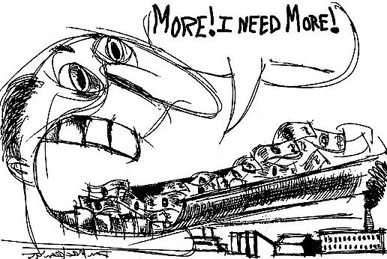
Buy, Buy: Confessions of a Consumerist

Image from www.ourbreathingplanet.com

This post is a part of my “Out of the Kitchen” weekly column at The Progressive Playbook in which various news and pop culture items will be examined through a feminist lens.


It is the time of year. The weather's cooler.  Bright colored lights fill our windows and there's a certain energy in the air. It can only mean one thing. The Christmas shopping season is upon us.

Maybe it's because Black Friday and Cyber Monday have just passed, or maybe it's because I'm moving so the fact that I own way too much is very relevant to me right now. In either case, I've been reflecting upon my own issues with consumerism. I've written before about how I feel that our society pushes consumption, not only of food, but also all goods. The worst of this mentality is highlighted during the Christmas season. It is inescapable, whether you celebrate Christmas or not. Messages affirming the importance of material goods are everywhere: You NEED this deal! Your love is displayed through the giving of items. Buy, buy, buy.

The results are pretty heinous, year after year. Because of mad rushes at store openings, people were injured and trampled. A woman out for a half price XBOX 360 turned a can of pepper spray on her fellow shoppers. It is downright disgusting and it's very easy to become an armchair sociologist in situations like this. I'm better than that. I could never act that way. Those people are "crazy." I'll admit, these very thoughts go through my mind every Black Friday when I hear that shoppers get up earlier and earlier or sit outside during Thanksgiving day. I muse to myself about how I have never wanted anything that bad.

It really is very simple to point to the Black Friday shoppers as the "problem" with our consumerist mentality. However, a much more productive act is to examine how each of us, ourselves, play a role in this system.

In this spirit, I've been considering lately how I personally have an unhealthy relationship with things, shopping, and appearances. This relationship, as many things from our lives, hearkens back to my childhood. My grandmother, the most important adult figure in my upbringing, and I bonded over many a shopping trip. She was very firm that I always  "look my best." She taught me how to apply makeup, do my hair, and pick outfits that matched. I have so many warm fuzzies associated with shopping and her. It was so frequently a respite from a less happy home life with my nuclear family.

But that wasn't all she was to me, so it's difficult to extract the many wonderful, empowering messages from the ones which are potentially negative and sexist. While she did think I should always be able to take care of myself and that I could be anything I wanted , she was also, at her core, a product of a time before the second wave. She fully believed that she couldn't leave with house without makeup (for example.)

The result on me has been that I engage in "retail therapy" out of both habit and a semi-subconscious effort to feel close to my grandmother again. I buy things I don't need and now own more shoes, clothes, nail polishes, and other frivolous items than any woman could possibly ever consume. The items themselves are not the problem. (I have been known to advocate for "girliness.") The issue is how very much of them I feel that I need. My disposable income is too often stretched thin in the name of the consumerist mentality.

For my own good, I must work on these behaviors. The solution for me is to find the same warm fuzzies from other sources and to be more mindful about the purchases I make. It sounds so simple, but just as systemic changes for our society, it is much easier said than done. However, if all of us who play a role in our consumerist culture take a moment to introspect and be more thoughtful about how and why we spend money, things will probably be a lot less violent on Black Friday. It would become extremely clear that when someone gets knocked down during a shopping rush, you don't walk over them. You help them up. And if it means that you miss out on a $90 TV, but a fellow human being gets to live another day, you've done the right thing.

Thursday, November 24, 2011

When Thanking Becomes a Problem

This post is a part of my “Out of the Kitchen” weekly column at The Progressive Playbook in which various news and pop culture items will be examined through a feminist lens.

It is the season of thanks. Expressing gratitude is a wonderfully beautiful thing; not only to express to others in appreciation of their generosity, but also as an act for oneself. Taking time to reflect upon the important things in our lives and really being thankful about them puts things in perspective. However, having laid out that I do think expressing thanks is valuable, I'd like to take a moment to discuss how simply saying "thank you," like most things, can be a very gendered act.

First, let me back up.  As a nonprofit manager, my work depends on the generosity of others. This career path puts you in the position to operate from a place of continual gratitude. That's a given. Nevertheless, this past summer, I realized something about myself and my communication style. I took a look at the emails I was writing. Literally every single one ended with "Thanks!" so much so, that it was even a part of my chosen signature line. Often I would start emails with a statement of thanks and then end it with "thanks again." Frequently, I was thanking people who were simply doing their jobs. In fact, I would end emails this way even when I was actually doing a favor for someone else. I also apologized for things that were not my fault and generally assumed a submissive stance in my day to day interactions.

It became a bit emotionally exhausting. People weren't reciprocating this behavior and I sort of felt like crap on a regular basis. I decided something had to change. I've come to believe that people will respond to you in the manner that you present yourself to them. If you grovel, they'll believe that they are doing you a favor. If you apologize, they will believe you were in the wrong. Apologies imply that much. Conversely, if I wanted to be taken seriously, I decided I had to drop unnecessary thanks and apologies.

This small switch in how I conducted my email communications began to make me feel a lot better. Turns out, I'm not alone in this approach. I recently read a piece by Amy Reiter over at The Daily Beast, where she goes through a similar process. She writes,
Then one day I looked up from my under-challenging, midlevel job and noticed that my boss, who was generally regarded as kind of a jerk, but a smart and talented one, never, ever thanked people. He never apologized. And he didn’t appear to give a rip about what was going on in the lives of anyone around him. He never took responsibility when things went wrong, preferring instead to label someone else the culprit and chew them out.

...A recent study examining the relationship between agreeableness, income and gender, published in Journal of Personality and Social Psychology, found that the workplace does tend to reward disagreeable behavior. Disagreeable men tend to earn more than agreeable men, and disagreeable women, though they earn less than both nice and not-nice guys, earn more than agreeable women, researchers found.
These facts are interesting. The truth is that sugary sweet politeness doesn't pay off, literally, so why use it? As women we are continuously told to play nice and to be accommodating and to put others before ourselves. It's high time we reject this behavior and reclaim our right to communicate clearly, firmly, professionally, and without groveling. I guess what I'm really getting at is that thanking, like everything else in life, should not be a mindless, reflexive act and it certainly shouldn't come from a place of obligation. It means much more when you offer thanks only when it is motivated by actual gratitude.  Basically, don't pepper your language with unnecessary thank yous and apologies.

And unnecessary really is the operative word here. I'm certainly not advocating for jerkiness either. So please do take time this week to express genuine thanks as you feel it. Appreciate the happiness in your life and share it with friends, family, coworkers, and you community. And do apologize when you are wrong.

Happy Thanksgiving, everyone! But to quote a very appropriate Tweet by scatx, "Be thankful on Thanksgiving, hang with family and friends - but don't for a second celebrate false history about Native/European relations." In case your curious, you can learn more about what she means here.

Thursday, November 17, 2011

Defend Community!

This post is a part of my “Out of the Kitchen” weekly column at The Progressive Playbook in which various news and pop culture items will be examined through a feminist lens.


I write about a lot of super deep topics around here. Rape. Homophobia. Eating disorders. Body shaming. Abortion. Street harassment...the list goes on. However, as it reads in my column intro, I write about both news AND pop culture. I'd like to take a moment to focus on and defend a beautiful peice of pop culture, NBC's Community.

Earlier this week, I heard that Community, one of my all time favorite TV shows, is in peril. It has been suspended indefinitely so the winter Thursday night line up doesn't include it. However, as Leah Rocketto wrote on TVology:
The show has not been cancelled. . . yet. According to New York Times television reporter Brian Stelter, the show is simply taking a break when 30 Rock returns on January 12. Stelter did his best to dispel the rumors on Twitter, also mentioning that Community has a slim chance of returning for a fourth season.
This has sparked tons of backlash from Community's small but loyal fan base. #sixseasonsandamovie as well as #savegreendale campaigns are all over Twitter at the moment. There are no shortage of voices explaining why Community rocks, just shortages of people watching it, apparently. Nevertheless, I'd like to add myself to the chorus making the case why we're not ready to let Community go.

When I first heard the news, part of me became deeply cynical. I see Community as an outlier of sorts--the cast is diverse both in terms of socioeconomics and race, so I got to thinking that of course a show of this nature gets cancelled. Meanwhile, 2 Broke Girls, Whitney, and Big Bang Theory are all still alive and kicking, but have virtually no brown characters and the ones they do have are tokens. Then yesterday Dodai Stewart over at Jezebel wrote a wonderful piece much more articulately detailing the importance of Community. She said:
But in terms of what it brings to the table, Community is a rare beast: Wry, witty, nuanced, hyper-kinetic, thoroughly current. And diverse. There are white guys, sure. But also women, black people, actors of Asian descent and a range of ages. On Community, along with Parks And Recreation, The Office, and, to some extent, 30 Rock, men, women, people of color work and white folks all work alongside each other, without a hint of tokenism or pandering. It's all about sharply drawn characters who bring the funny — a quality that knows no race or gender. In the 1970s, shows likeWhat's Happening!! and Good Times reflected an underrepresented group in society: Working poor black Americans. Community speaks of a different, more current America, one in which it's less about where you come from and more about where you're going. The very premise of the show — that a motley crew of individuals band together as a group in the name of education — touches on an aspect of the American dream. Community's strength lies in its utter unpredictability, wackiness and in-jokes; by being so inclusive, racially and gender-wise, it transcends color and sex and becomes about people. And how weird they are. And how we can be thrown together with folks we have absolutely nothing in common with, yet form (dare I say it?) a community.
YES.

The name Community isn't just about the fact that the characters are students at a community college. It's also a nod to the fact that they are an extremely random crew who have very little in common at first glance. However, throughout their various adventures together, they realize time and time again that they are family of sorts. They are the community. It's a joke on the show that the school's slogan is "you're already accepted" but it could be said that this is the very approach the students take to one another.

The show doesn't just represent a diverse cast. It has a lot of other really progressive things going on--women who have bodies we don't typically see in the media, students dealing with drug addiction recovery, religious tolerance, learning to ask for help when you need it, unplanned pregnancies, what it means to be a nontraditional student, as well as sexism, ageism, racism, and every other -ism. Their dealing with these topics is not always perfect. Just like real people, they are trying to figure it out as they go. But above all else, it's funny. I don't know how else to put it. It's just genuinely hilarious and so well written. The creator, Dan Harmon, didn't just think of a fun little TV idea and write a show. Conversely, he puts so much time, thought, and work into the show that it's really remarkable. If you are someone who loves geeky things or pop culture, you will be rewarded through references to spaghetti westerns, zombie flicks, animated Christmas specials, and much more.

I don't know how people who love stuff of this nature--like Freaks and Geeks, Undeclared, Arrested Development, and Party Down--haven't learned yet that we have to tune in faithfully and get our friends to do so as well, or what we love will keep being canceled. At the end of the day, that's what TV is; a business intent on making money through advertising revenue. And if there are no viewers, there is no money.  So until executives learn more sophisticated measurements than Nielsen ratings, we're going to have to play the game or accept that what we love is going to be axed.

But HOLY CRAP do I ever hope Community isn't axed. Because when you write about really serious stuff, it's nice to be able to tune into something fun and lighthearted that can make you really laugh. If you aren't already, I implore you to tune into Community this week and check it out. Catch up on the series through Hulu or Netflicks and join the twitter campaigns. We have enough of the other stuff. Don't let Community slip away!

Wednesday, November 9, 2011

There's Only One F Word that Bothers Me

This post is a part of my “Out of the Kitchen” weekly column at The Progressive Playbook in which various news and pop culture items will be examined through a feminist lens.

Trigger warning for homophobic slurs.

If you asked me 30 minutes ago who Brett Ratner is, I would have fumbled around for a minute or two before admitting that the name sounds familiar but I can't place it. In fact, I think I might have even claimed he was affiliated with 80 hair bands, in some kind of twisted combination of Bret Michaels and Riki Rachtman. My mind can create really interesting things when pressed...

Anyway, as I'm told by Ronald who shared this news with me, Ratner is, in fact, a filmmaker. He's responsible for a myriad of mediocre films including Rush Hour, Red Dragon, and X-Men: The Last Stand. But I became acutely aware of him because Mr. Ratner recently decided to proclaim that "rehearsal is for fags."

Part of me just wants to stop here and let that ignorance hang in the air. But I can't let it go. I feel like I am continuously making this case, but I will assert this at least one more time:

Words matter.

I am someone who loves language. I love how word choice can add impact, gravity, and/or flavor to whatever message you are trying to convey. Words, to me, mean everything--and I truly believe that the words we use shape our reality. Language can create the most beautiful imagery. It can empower us to tell our own stories, transport us into whole new places, educate us about things beyond our own small worlds, and help us express deeply felt emotions.

But the power of words, when thrown around carelessly, can also hurt others and cause us shame and humiliation.  Too often people think that language is "no big deal." However, as I've argued before, all the little deals can really add up into things that make the big deals. When society is, in this case, making every possible effort to other and disparage homosexuals, is it any surprise that gay kids are sometimes bullied to death?

There is clearly a negative side to the power of language, which is often a tool of oppression. How many women are called bitches when they stand up for themselves? How often is a woman called a slut for doing the very same thing a man does (but he's a "player?") How much was/is the "n-word" used to spit venom at African Americans? How many times were Jews compared to animals during WWII in order to dehumanize them and justify mass murder?

When you really think about it, it becomes pretty clear. Words are amongst the few uniquely human things we have, and despite our childish notions about "sticks and stones" or "rubber and glue" words can and do hurt us.

Mr. Ratner is learning that words matter the hard way. He has since issued an apology and stepped down as the producer of the upcoming Oscars, but the impact of his initial words remains, nevertheless. His original four word statment has now required a lengthy apology, which he acknowledges is not enough.

That's the tricky thing about words. When you say them, they're out there. You can try to undo them all you want, and issue flowery apology after flowery apology, but nothing said can ever be unsaid. That's become a cliche, but things become cliches for a reason. I think it's appropriate to invoke one of my all time favorite lyrics, by Modest Mouse in "Blame it on the Tetons:"
Language in is the liquid that we're all dissolved in, Great for solving problems after it creates a problem
I just keep coming back to a very simple concept: respect. It's something that is taught to us from the time we are in preschool, but we still have a hard time grasping.  Eliminating hate speech is really quite simple when you demand it upon yourself to only choose words which offer respect and dignity to every person you are speaking to and about.  There really is no excuse for carelessness.

Wednesday, November 2, 2011

In Case You've Forgotten, Marie Claire Wants You To Know: You're Not Good Enough


This post is a part of my “Out of the Kitchen” weekly column at The Progressive Playbook in which various news and pop culture items will be examined through a feminist lens.

This woman looks harmless and normal enough, doesn't she? But she's hiding a really sinister plan. She's the face of everything telling you you're not good enough.

Ok, ok! In reality, I have no idea who this woman is. And I kind of feel really, really bad for her because her image is being used in a shitty way, whether she agreed to it or not. Marie Claire has up a new "Virtrual Weight Loss Tool." I think it's appropriate here to invoke a HUGE trigger warning on that link for weight related issues as well as the rest of this post.

As the site says, "What would you look like if you lost 10 lbs? Give your body an instant makeover with this virtual weight loss tool."

Really?

Also, when you first arrive at the page, the biggest, boldest letters at the top loudly delcare: "YOU...but better."

Again...really?

Apparently Marie Claire's website hosts a whole section of "beauty and fitness tips" under the heading "YOU...but better." Some of the topics include:
  • Total body tune ups.
  • Dieting tips and recipes.
  • New beauty products that will change your life.
  • The latest fitness crazes.
I think it's time here for me to let out a huuuuuge SIGH because, I'm over this stuff, y'all! You see, Marie Claire is just another voice in the chorus telling women over and over: You, just as you are, is not good enough. You are not good enough. You need to change.

I've written before about the dangerous messages that girls and women are sent about their bodies, looks, and food. This toxic combination is not some abstract concept. It is a daily reality that almost all of us struggle with at some point. As I've mentioned before, I work in direct service with young women. Today I learned at a staff training that disordered eating is becoming extremely prevalent. (Note: I say disordered eating as opposed to eating disorders, because I mean that many more girls, who do not have diagnosable eating disorders, are exhibiting eating behaviors which are increasingly problematic.)

The psychologist who was training us explained that she feels that there is no way to deny that our media and culture are to blame for the increase she sees in her practice. She mentioned, specifically, the unrealistic ideal of beauty portrayed by magazines, movies, and television.  Over and over we are inundated with fakeness--created images which perpetuate the myth that some women are "perfect" and encourage girls to compare themselves to these "perfect" women, all in the name of selling products. Don't have clear skin like her? Buy our acne product! Don't have a butt like her? Buy our toning shoes. Don't have abs like her? Take this weight loss supplement.

It's no secret that girls face pressure to be perfect. All too often, the girls who feel these pressures most strongly end up engaging in variety of self destructive behaviors, one of which is disordered eating. Interestingly, the psychologist today shared that in her experience, many of the girls who she treats say they don't like other girls and they lack female friendships. I couldn't help but wonder if another result of the pressure to be perfect is alienation from other girls--young women who could have provided much needed empathy and support. It makes the quest for perfection all the more scary and lonely.

Let it be known, I am not against self-improvement. I think that there is power and beauty in continuous learning and self-reflection. However, the message that you can always be better when it comes to weight and looks has devastating effects on girls and women. Unfortunately, companies like Marie Claire are waiting to prey on female insecurities. It's up to those of us who have gained the ability to critically consume media to impart the lessons we've learned to young people. For example, if you don't like the messages sent by a magazine, don't buy it OR the products that sponsor the publication.

Maybe this is me just being idealistic (which I'm not known for!) but someday, we just might see a more diverse, realistic beauty ideal, which is representative of many more people. Or at least they can stop telling us we're not good enough.

Wednesday, October 26, 2011

Jimi Izrael: Epic Disappointment

This post is a part of my “Out of the Kitchen” weekly column at The Progressive Playbook in which various news and pop culture items will be examined through a feminist lens.

I love NPR's Tell Me More. I listen to it almost every day that I drive to work. I've written many times about the numerous interesting topics it has brought to my attention. I think Michel Martin is perhaps the most compelling interviewer on NPR's nationally broadcasted programs.

One of the show's regular Friday segments is the "barbershop" where Martin checks in with an ever rotating line up of diverse men. They chat about current news topics, politics, and sports. The regular leader of the pack is Jimi Izrael. I've always found Izrael's contributions to the discussions to be insightful. So I was, at first, pretty excited when I saw that a piece he wrote had been picked up on Jezebel today.

Izrael's piece is about a 14 year old girl, Amber Cole. Cole is making news because a video of her performing oral sex has gone viral. The story is a big deal, because it is obviously extremely disturbing. Izrael's narrative is told as the metaphorical father of the girl. The crushing reality hit me as I saw that Izrael's piece, while rightfully highlighting some of the racial implications of the tragedy, amounts to not much more than misogyny. Here are some excerpts:

She would listen to her mother, if her mother was not busy. Doing something, anything that is not parenting. I want her mother to spend less time being "empowered" and more time being aware and engaged with our daughter. I want her mother to be a better role model, not a BFF.
...
I am Amber Cole's father, and I am not raising a slut. White feminists can teach their own little girls to find empowerment through their crotches – my brown little girl cannot afford to be that carefree and cavalier with her life choices. Slutlife is the hard, lonely vocation of rich, educated, privileged white women who will fuck The World, contract social diseases and still, somehow find a husband. No black woman ever got far being a slut. I want to know what kind of women "slutwalk," while young impressionable girls of all kinds look on with wonder and admiration. I want to know why these same women run to protect Miley Cyrus but just shrugged, nonplussed for my little brown girl. I want to know what the fuck those dumb bunnies are thinking. Most of them do not have daughters. I want my daughter, the woman, to have healthy, vibrant sexuality. My little girl should have other priorities. I am her father. I will protect her and every woman in my life with my life.
Wow.

If you want a really great run down of the problem's with Izrael's piece, I suggest the comment section over at Jezebel, because the community there take down every line in his piece much better than I can. However, I would like to note a couple of things. First of all, this piece is written as the metaphorical father of Amber Cole and girls like her, but it squarely places the blame back on mothers (and later the media). It doesn't say very much about how fathers (or the absence thereof) can actually play such a critical role in the sexual values and self-esteem formation of young girls. Instead, his piece goes on to emphasize the fact that as a father, he was probably at work while this happened "doing the best I can."

So the mother is at fault because her absence is her being "empowered" but the dad is blameless because his absence is him "doing the best he can?" I just...I don't even know what to say. This idea is so deeply tied to traditional gender roles and sexism that it sickens me. It's the age old idea that mothers are ultimately responsible for kids. It's tired.

Secondly, I take his point that "sluttiness" has different implications for a white girl than it does a brown one. All too often, brown women's bodies are hypersexualized and behaviors/clothing choices seen as slutty to them are seen as acceptable to white women. This is a fair point and we can discuss this. We can also discuss how women of color have been traditionally excluded from the feminist movement, which has for too much of its history, been concerned about the issues which affect priviledged white women.

However, to place the blame for the situation with Amber Cole, who is the victim of child pornography and cyberbullying, on feminists is ludicrous. As is his slut-shaming. Izrael is obviously very uncomfortable with female owned sexuality. As commenter Gavagirl pointed out at Jezebel:

Of course little brown girls who get their freak on frequently and with gusto can't find husbands. Because only nice brown guys like Jimi Izrael want to get married to brown girls, and nice brown guys don't like filthy brown whores. And of course that's not due to any kind of fault on the part of the nice brown guys. It's up to the brown girls to make sure they've lived up to the expectations of the brown guys so that they shall be rewarded.

Lastly, to put the icing on the misogynistic cake, when the shitstorm of comment starts, Izrael jumped on Jezebel and left a gem of a reply including this:

It is easy for you to cosign some little black girl giving head, to suggest that little girls embrace the ideas behind a "Slutwalk" –which sounds too close to "Hoe Stroll" for my taste—when you are not a stake-holder. I have a daughter. I am a stakeholder, and this shit is real to me. It’s my every-day, my every-week. And it’s hard.

Now, surely this is just a joke. We, the women who find his assessment offensive, are not "stakeholders" because we do not have daughters? Your opinion of girls only counts if you are a father of a girl? Honestly, despite all the hateful stuff spewed above, this is the part I find most offensive. To suggest that the most important stakeholder in this case is the MALE relation of the girl is so absolutely mind-numbingly foolish that I can almost not even continue.

How are we, women who lived the very experience of growing up female, not stakeholders in the development of the next generation of young women?

Look, I get it. It's hard raising kids. I can appreciate that it is no easy task because all too often I could tell that my parents had no idea what they were doing. Additionally, I work in girl services. While I do not know the first hand experience of parenting, I do work with dozens of moms and dads raising girls who are the same age as Amber Cole.  I know that parents of both genders are always looking for resources to help them navigate raising daughters. But how dare he say that it's easy for childfree feminists to participate in SlutWalk because we are not "stakeholders" in the girl world. In the discussion of female sexuality, no perspective is more important than women's. (Never mind the fact that Izrael has totally missed the point behind SlutWalk.)

All around, I am deeply disappointed at Izrael's reaction to Amber Cole's story. I feel like he brought up a couple of really great things that the feminist blogosphere could have read, discussed, and learned from, but he put together a highly offensive anti-woman rant. As HeliosHyperion said, "How am I suppose to take him seriously, respect his opinion whether or not I agree with it, when he so obviously hates women?"

And selfishlessly, I'm disappointed that my Friday morning "Tell Me More" segments will come with a little more spite and a little less respect, on my part.

Tuesday, October 11, 2011

Female Bodies Are Not Unprofessional

This post is a part of my “Out of the Kitchen” weekly column at The Progressive Playbook in which various news and pop culture items will be examined through a feminist lens.

I’ve been hearing few murmurings around the internet of this story, in which people are upset that the Premier of British Columbia, Christy Clark, had a little smidge of cleavage showing. As one Canadian opinion writer said, Clark should be wearing clothes “that won’t risk compromising her professionalism and stature in the eyes of some.”

This makes me bristle. Perhaps it’s because I had to have some professional head shots done recently, and it was near impossible for me to have them taken without at least a smidge of cleavage showing. Or perhaps it’s because this just smacks of sexism.

It’s well reported that female politicians are continuously picked at for their clothing choices. For male politicians, sticking to a basic dark suit is a fail safe. As long as men make this choice they’re rarely seen as under dressed. Or over dressed. Or inappropriately dressed. In fact, their clothes are virtually a nonissue all together. Read more...

Wednesday, October 5, 2011

Seriously, STOP Using Rape Analogies. Now.

This post is a part of my “Out of the Kitchen” weekly column at The Progressive Playbook in which various news and pop culture items will be examined through a feminist lens.

Trigger Warning for discussion of rape.

I was just reading through Jezebel, when I encountered this quote from Johnny Depp about photo shoots:

Well, you just feel like you’re being raped somehow. Raped … It feels like a kind of weird — just weird, man.” He’ll pose with fans, “But whenever you have a photo shoot or something like that, it’s like — you just feel dumb. It’s just so stupid.

This kind of stuff just outrages me so much that I have a hard time even knowing where to begin. Because I am usually quite happily enclosed in a protective feminist bubble, I hear rape metaphors rather infrequently in my personal life. And when I do hear them, I feel pretty confident in pointing out how very wrong they are. Read more...

Tuesday, September 27, 2011

Choice Matters

This post is a part of my “Out of the Kitchen” weekly column at The Progressive Playbook in which various news and pop culture items will be examined through a feminist lens.

You’ll have to excuse my brief absence. First I was sick and then I took a trip for my birthday weekend which had me driving from my current home in Austin, TX to my childhood home in Indianapolis, IN. The good news is that this jaunt gave me quite a bit of inspiration, although not in a pleasant way.

If you’ve been keeping track lately, you are aware that Indiana has the most restrictions against abortion. And Texas ain’t doing so hot either. So it should be no surprise that the drive between these two cities was littered with billboards, bumper stickers, and other advertisements all telling me how extremely terrible abortion is.

When you make the same 18 hour drive twice in five days, you have a lot of time to think. My mental wheels were turning as the physical wheels also spun, and I couldn’t help but mull over my thoughts on choice. Read more...

Wednesday, September 14, 2011

Learning to Tolerate Zooey Deschanel: A Feminist's Struggle

This post is a part of my “Out of the Kitchen” weekly column at The Progressive Playbook in which various news and pop culture items will be examined through a feminist.

So let’s take a moment to talk about a pop culture icon of a woman, who seems to be nearly everywhere, shall we? Let’s talk about Ms. Zooey Deschanel.

Deschanel is tricky territory for me. She is someone who on a fundamental level just rubs me the wrong way, which is absurd, of course, seeing as how I’ve never met her. But in ever-presentness (she’s not only an actress but also a singer and fashion icon) I have found there to be a quality about her which doesn’t mesh well with me.

I’m not sure what it is. We can all agree that Deschanel is cute. Maybe it’s that she’s too cute. From her doe like eyes, to her hip vintage style, her hypnotizing folk band singing voice, the hearts on her cell phone, and her website’s URL (hellogiggles.com) she is undeniably adorable. Even her first name has a favorite childhood fieldtrip destination hidden right in it! Read more...

Friday, September 9, 2011

Ditch Your Love Hate Relationship With Street Harassment

This post is a part of my “Out of the Kitchen” weekly column at The Progressive Playbook in which various news and pop culture items will be examined through a feminist lens.


“Hey girl, you look good.”

They’re pretty innocent words, and most women have heard at some point in their lives. There is a certain risk in “walking while woman.” This risk is called street harassment. Street harassment, as explained by Hollaback!

is one of the most pervasive forms of gender-based violence and one of the least legislated against. Comments from “You’d look good on me” to groping, flashing and assault are a daily, global reality for women and LGBTQ individuals. But it is rarely reported, and it’s culturally accepted as ‘the price you pay’ for being a woman or for being gay.

The fact of the matter, however, is that if you ask some women how they feel about the comments they receive, there is an inherent love/hate relationship. In many circumstances, it can be sort of nice to have someone holler at you, tell you that you’re hot, or ask for your number.

However, there is a point where each person feels that a line has been crossed into unacceptable advances.


I’m not talking about being at a bar and sharing in mutual flirtation or friendly banter at the bus stop. Most of us know inherently what is innocent and what is problematic. Sometimes you feel it in your gut when the situation just isn’t right and begins to feel a bit threatening. Other times, there is absolutely no question when the line is crossed.
That was the case for Jenna Sauers over at Jezebel who recently wrote about a terrifying experience in a subway tunnel. A man masturbated in public, for her to see, for over 10 minutes. She called NYPD but it appears that no one ever came. Her story is a great example of how problematic street harassment is. She wrote,
Women are taught so many messages about how we need to behave in order to “prevent” sexual assault and sexual harassment in public spaces. How we need to look, how we need to dress, how we need to walk, how we need to make ourselves small and unremarkable, how we need to anticipate the behavior of others, how we must not “attract” the wrong kind of attention. Even though I resent that these messages fundamentally imply that women bear responsibility for insuring sexual assault does not occur, I still, almost in spite of myself, take all of these things into account when I get dressed and when I go out in public. To have already engineered your behavior to meet the threat of assault and then to still face criminal harassment just feels like an added injustice.
Like I mentioned, Jenna’s case is extreme. But when you really think about it, all street harassment is a problem. There is no reason that a woman shouldn’t be able to pass through her city or neighborhood without hearing lewd comments about her body or be subjected to groping from strange people on public transportation. That’s a huge violation of one’s autonomy, but oftentimes we accept it as a fact of life. This mindset must be reversed. No person, regardless of their gender, race, sexual identity, ability, or another other identifier should be afraid to simply exist in public streets. And the truth is that it is the same culture that normalizes more innocent comments which creates extreme situations like Jenna’s. So…what can we do? There are a few easy steps to help end street harassment:

1) Don’t participate in it! (Pretty simple, indeed.) This mean agreeing to not make unsolicited comments at others. We, as women, must also end our love/hate relationships with cat calls. Despite the momentary flattery associated with some street harassment, you’ve got to remember the bigger picture is much more scary. When you feel that you are able, do not passively accept these comments as sweet talk.

2) Hollaback for yourself. If you have a run in with street harassment (and even if you don’t and you just want to learn more!) check out their website. There you can share your story, pictures, and experiences. Hollaback! is using 21st century technology to create a crowd-sourced initiative to end street harassment. They’ve got some pretty great stuff going on over there. I would wager that most women have their own story of “walking while woman” and can see that there is a big difference between our experience in the streets and our male friends and family members’.

It’s about time for a culture shift, because as Hollaback! says, “Sexual harassment is a gateway crime that creates a cultural environment that makes gender-based violence OK.” If you don’t believe me, go back and read Jenna’s piece again.

Tuesday, August 30, 2011

Symbols Only Take You So Far

This post is a part of my “Out of the Kitchen” weekly column at The Progressive Playbook in which various news and pop culture items will be examined through a feminist lens.

This past Friday was Women’s Equality Day. According to the National Women’s History Project, this day “was selected to commemorate the 1920 passage of the 19th Amendment to the Constitution, granting women the right to vote. This was the culmination of a massive, peaceful civil rights movement by women that had its formal beginnings in 1848 at the world’s first women’s rights convention, in Seneca Falls, New York.”

Awesome, right? You’d think a feminist would be ecstatic about that! Well, yes and no. Read more...

Tuesday, August 23, 2011

Food, Fatness, and Feminism

This post is a part of my “Out of the Kitchen” weekly column over at The Progressive Playbook in which various news and pop culture items will be examined through a feminist lens.
Today, when I was browsing the ‘net to see what was going on in my world, I stopped for a moment on the top stories at Yahoo (first mistake). There, I was reminded of one of the biggest mixed messages we receive: eat, eat, eat! But somehow, above all else, stay thin.
As women, we encounter confusing messages almost everywhere we turn. We’re supposed to remain virginal, but we’re also supposed to know how to please a man. We’re supposed to simultaneously be amazing mothers and also now the best in our fields. We’re supposed care about how we look and be attractive, but not dress too sexy (because then we’re sluts.) On top of it all, comes the additional pressure that we are supposed prepare and enjoy food, yet make sure that we work off all of those tricky little calories so that we stay desirable.
The burden to be thin in our society is undeniable. Practically no one is immune to the messages. In fact, “almost nine in 10 American teenage girls say they feel pressured by the fashion and media industries to be skinny and that an unrealistic, unattainable image of beauty has been created.” The results of this pressure are detrimental. “10% of the girls and women in the US have eating disorders. Of those, an estimated 50,000 will die as a result of their disease.” It’s no joke. Read more...

Tuesday, August 16, 2011

Dude, You're a Feminist

This post is a part of my “Out of the Kitchen” weekly column at The Progressive Playbook in which various news and pop culture items will be examined through a feminist lens.
I recently saw this amusing video on Feministing.
While it’s a hilarious watch for those of us generally familiar with feminism, the video reminded me of one key misconception that I keep seeing: that feminism is just for women.
The stereotype of the man hating feminist really is just that (a stereotype). Men can be and are feminists. For some reason, this concept is very foreign to many (if not most) people. Although, as I’ve discussed before, there seems to be a mental block toward calling anyone a feminist, the reluctance to accept male feminists is overwhelmingly strong. So much so, that there are entire new words and phrases, including “feminist ally,” created in an attempt to hide the fact that a man is free to identify as feminist.


Fact of the matter is that men experience the pressures of a sexist society. For example, the very prevalent idea that “boys don’t cry” or that emotions are just for women can lead many men to experience frustrations associated with repressed emotions and limited self-expression. The constant message that child care is women’s work can mean that men who wish to be primary caregivers are seen as lesser. Sexism also creates an unhealthy hyper-masculine perspective of manhood which promotes the acceptance of violence against one another. The affects of sexism on men have even created the myth that men can’t be raped.

Men who identify as feminists are aware of the affects of sexism on their lives, not only because they have examined feminist theory, but also because they have most likely had their intentions questioned. The assumption is that men would only care about feminism because they want to get in a woman’s pants, not because they have a genuine interest in the topic. (And I’m not talking about that one guy in your Women’s Studies 101 class who was there scoping out his classmates and continuously arguing with the professor…I’m talking about men who really pay attention to and care about gender in the world around them.) The stereotype of the pseudo-feminist man who wants a date is promoted frequently, for example, in this misguided breakdown of feminist types.

Unfortunately, even feminism itself can be exclusive to men. I remember in my first women’s studies class, my professor mentioned that she thought there was some validity to the claim that, “Feminism is the theory, lesbianism is the practice.” As a wee-young-feminist-in-training who was partnered with a man, I found it to be fairly insulting. But when you consider the implications of this statement for men, it’s even more discouraging. However, as I grew into my feminism, I understood that the movements and its principals are actually much more inclusive than this pithy phrase indicates. As I’ve referenced before, I adhere to bell hooks’ definition of feminism in that, it is simply to end sexist oppression. (Nearly everything beyond that is up for debate.)

I guess my overall point is that there is no reason why men who reject sexism cannot participate in the feminist movement and identify in any way they please. Sure, it’s possible that a few men will misappropriate the term, but they wouldn’t be the first, and they won’t be the last. So dudes, if you’re feeling it; own it. You can be a feminist too.